
Southern California Shadow Sleepers Foundation
Focused On Supporting The Vehicle Housed Homeless Class (Roto Homeless)
The Shadow Sleeper Movement Maturity Journy From Unknown To Full Community Suoport
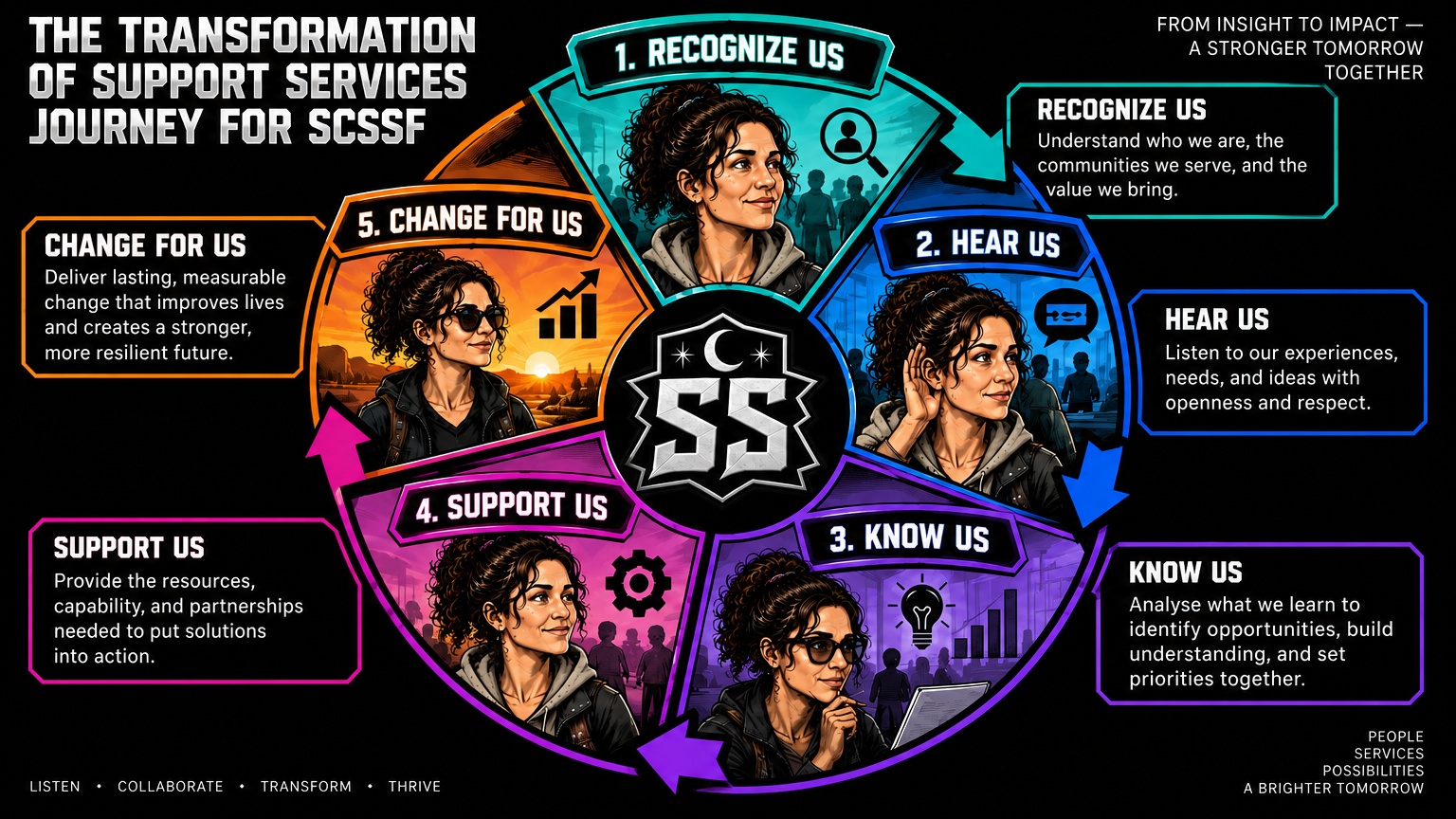
Mission
The Shadow Sleepers Foundation exists to elevate the visibility, self-confidence, and practical support available to vehicle-housed individuals— known as Shadow Sleepers in honor of their skills to sleep in and disappear into the night time shadows. The foundation works towards building sustainable, community-driven pathways that strengthen their stability, mobility, and opportunity. We will partner with state agencies, nonprofits, and civic organizations to design targeted support mechanisms, create sanctioned service opportunities that fulfill work requirements for public benefits, and foster authentic networks that connect Shadow Sleepers with one another and with the broader community. As the founders are deeply embedded computer science experts, the foundation seeks to build high dimensionality data models of this entire demographic to create ultra accurate predictive and support services.
Vision
A future in which vehicle-housed living is recognized as a legitimate, often temporary, housing strategy rather than a hidden crisis; where Shadow Sleepers have reliable access to the resources, recognition, and networks they need to thrive on their own terms; and where data-informed, AI-augmented systems continuously improve outcomes for this resilient population.
Core Strategic Goals
1. Awareness & Narrative Shift
Reframe public and institutional understanding of the Roto/Shadow Sleeper demographic—moving beyond deficit-based labels toward recognition of their resourcefulness, mobility, and capacity. We position “Shadow Sleeper” as an identity that carries quiet pride and agency.
2. Targeted Support Infrastructure
Collaborate with state agencies and nonprofit partners to develop and scale support mechanisms specifically designed for vehicle-housed individuals (hygiene access, secure storage, power solutions, laundry, connectivity, paperwork navigation, and safe overnight options).
3. Shadow Sleeper Boost Events
Host regular, high-visibility “Shadow Sleeper Boost” gatherings that deliver immediate, practical donations (gear, services, and resources tailored to vehicle living) while creating structured opportunities for networking, peer support, and cross-demographic relationship-building.
4. Sanctioned Service Pathway (501(c)(3) Formation)
Establish a 501(c)(3) nonprofit organization and formally register with relevant state and nonprofit entities so the Foundation can serve as an approved site where able-bodied recipients of EBT and other public benefits may fulfill mandatory community-service or work-requirement hours. This creates a dual benefit: participants meet program obligations while contributing directly to the Shadow Sleeper community.
5. AI Machine Learning & Data Modeling
Build and maintain the Shadow Sleeper Foundation Data Model—a high-dimensional, real-world dataset that captures the lived experience, resource needs, mobility patterns, and outcomes of shadow sleepers with AI systems to generate actionable insights. From this will be born a whole suite of predictive support services offering data science capabilities usually only seen in the largest for profit corporations to shadow sleeper class of homeless.
Background
The foundation divides all people into three distint categories using the Latin root words Domo (Home) Roto (Rotate) and Strato (Street).Domo describes people who reside in some type of legally recognized home or domicile including a house, townhome, apartment, motor home or RV camper. If the law legally sees this as a place to sleep, then this person would be classified "domo" or someone with a stable home. Roto describes people whose primary residence is a vehicle that is not classified as a legal permanent dwelling under local law—cars, vans, SUVs, and similar non-motor-home vehicles used for sleeping. Daily life typically involves finding safe overnight parking, managing limited space for storage and hygiene, accessing public restrooms or gyms for showers, and keeping the vehicle operational for both transportation and shelter. Weekly tasks often include locating free or low-cost parking spots, washing clothes at laundromats, and stocking food that requires little or no refrigeration. The main risks are parking enforcement, mechanical breakdown, and weather extremes. Tickets, towing, or forced relocation can leave someone without shelter overnight; a broken-down vehicle can strand them with all their belongings inside; extreme heat or cold inside a metal shell quickly becomes dangerous. When these problems occur, the person may face fines they cannot pay, loss of the vehicle itself, temporary or prolonged exposure on the street, or the need to scramble for emergency shelter while trying to recover their only form of housing. Strato refers to people living outdoors or in places not intended for habitation—sidewalks, parks, underpasses, abandoned structures, or makeshift camps. Daily existence centers on securing a relatively safe spot to rest, finding food and water, protecting belongings from theft or weather, and navigating public spaces while avoiding confrontation. Weekly patterns often involve moving between locations, accessing free meal services or resource centers, and trying to maintain basic health and cleanliness with limited facilities. Primary risks include exposure to weather, violence or theft, health deterioration, and repeated displacement by authorities. Severe weather can cause hypothermia, heat stroke, or illness; assaults and property loss are common; untreated medical issues compound quickly without stable housing. When these crises hit, the person may be forced into emergency shelters (if available and accessible), hospital emergency rooms, or further isolation, often losing remaining possessions and facing greater difficulty climbing back to more stable housing. We focus exclusively on the Roto class in the above definitions. We use the term Shadow Sleepers as it is a more powerful name that instills confidence in any one that describes themselves with it. We fill by maintaining laser focus and all available power on one demographics needs we maximize the time spent. In addition, Shadow Sleepers are often only one mishap away from becoming Strato-class homeless. By supporting a person while they are Roto-class before they fall to Strato-class homeless, and Roto-class homeless see the biggest return on support delivered and can be quickly brought back to Domo-class persons (persons with some type of home). As the founder is himself Roto-class homeless, the organization has unique insights to problems the founder lives every day.
True resourcefulness means converting the limited space of a vehicle into a highly optimized, functional ecosystem. It is the ability to leverage critical off-site assets like 24-hour gym networks and secure storage facilities to multiply your daily operational capacity. By mastering local resource mapping and utilizing public infrastructure creatively, a Shadow Sleeper turns survival into strategy. Resilience is the steel plate armor that keeps a vehicle-housed individual mobile and stable through mechanical setbacks, strict parking enforcement, or sudden weather extremes. It means absorbing the immediate shock of a chaotic situation without letting it disrupt your long-term plan. A resilient Sleeper adapts instantly, moving steadily from the initial crisis of a beginner toward complete environmental mastery. Maintaining a highly respectful posture is a practical tool for survival that protects both the individual and the entire foundation's reputation. It requires practicing absolute silence during night hours and cooperating fully with law enforcement or private property managers to eliminate unnecessary friction. By treating authority figures with calm professionalism, you disarm potential opposition and safeguard your resting spaces. Being relentless means fiercely protecting your personal trajectory and refusing to let temporary hardships compromise your daily routines. It is the unwavering drive to keep your paperwork updated, your vehicle legal, and your habits strictly disciplined regardless of emotional exhaustion. This persistent focus ensures that you stay moving forward, completely unyielding in your mission to rebuild a stable future. Ruggedness is the physical and mental durability required to handle the unique, unglamorous logistics of a mobile lifestyle. It means taking control of your physical health through fitness and nutrition so your body can withstand the constant pressures of vehicle dwelling. A rugged Sleeper embraces the daily grind with quiet, enduring stamina, remaining tough enough to handle the hardest times with pride. A master Sleeper relies on cold, system-driven logic rather than allowing raw emotion or panic to dictate critical survival choices. Being rational means assessing threats objectively—whether analyzing local municipal ordinances, managing paperwork, or navigating an interaction with a vigilante citizen. Operating with calculated clarity ensures that every decision you make is deliberate, protective, and focused on high-return outcomes. Taking time for careful, analytical thought allows you to continuously evaluate and improve your mobile living setup. It involves looking at your current maturity phase honestly, learning from veteran tactics, and identifying which support systems yield the highest stability gains. Reflection transforms random daily endurance into a structured, evolving framework for personal progress. Refinement is the process of ruthlessly filtering out clutter, chaos, and impurities from your immediate environment and presentation. It is expressed by keeping your vehicle immaculately clean, your capsule wardrobe polished, and your appearance completely indistinguishable from any housed professional. By purifying your habits and keeping living artifacts tucked away, you command self-respect and achieve total invisibility from the street. Achieving a relaxed state means mastering your environment so deeply that the stress of vehicular living no longer triggers anxiety. Through effective privacy masking and secure preparation, you unlock genuine peace of mind and high-quality, restorative sleep. Projecting a calm, unbothered demeanor keeps your energy balanced and prevents drawing unwanted outside attention. To be replete is to operate from a mindset of abundance and readiness, ensuring your tech connectivity, backup resources, and safety nets are fully stocked. It means intentionally building and feeding a trusted social and professional network so you are never truly isolated. When your personal ecosystem is rich with verified data, solid connections, and stable tools, you possess the structural strength to lift up other members of the pack. 1. Leave any place you utilize for sleep as clean as when you arrived or even more clean. Remind other Shadow Sleepers of the same, if they are unable to do so, you must step in and do it with them or do it completely if they can not. 2. During night hours stay completely silent for your benefit, the benefit of others and the reputation of the foundation itself. 3. Keep your yourself and your car clean and hygienic with daily and weekly cleaning routines including daily showers or baths for you and once a week carpet cleaning in your vehicle. Being very clean from yourself to your vehicle is of paramount importance. 4. Assist other Shadow Sleepers in any way you are able. Mentor those that do not possess as much knowledge as you. Stand up for your fellow Shadow Sleepers. Help them find resources and any other help they require that you are able to provide. 5. Follow all laws and cooperate with law enforcement and property manager's security guards when approached by them. We do not need the reputation of being difficult or annoying. Be respectful, follow all commands, do not argue or otherwise make it excessively difficult for them to do their job. 6. If you are sufficiently able-bodied enough to do so... Get fit and stay fit. Even if you never had before, getting daily exercise will have massive positive effects on energy and mood and ultimately the decisions you make. 7. Stay up to date on paperwork. Ensure you have a current valid ID. Make sure your car's registration is current. Maintain any legally required insurance. Keep copies of all these in the vehicle so can produce them if asked by law enforcement. If you are in jeopardy of losing these things reach out to us, 211 or your closest county social services office and they may be able to provide help including DMV fee reductions or outright fee waivers. 8. Eat as clean and as healthy as you possibly can. Your health is largely dictated by what you eat and health is the steel plate armor that stops illnesses from penetrating you and compromising critical immune system functions. 9. Maintain a communications device such as a tablet or phone. State agencies, support organizations and other Shadow Sleepers need to be able to get a hold of you each for their own high-pay off roles. If you do not have one or are in danger of losing your communications service, reach out to us, 211 or your closest county social services office to get government assisted communications that likely will be 100% free to you. 10. Be bold, confident and deliberate in all that you do. You are a Shadow Sleeper and you have by your very existence as a Shadow Sleeper shown that you can handle the hardest of times and come out as strong as ever. Take pride in being a Shadow Sleeper and take pride in yourself even more. The Foundation is led by an enterprise technology program architect who is also a current Shadow Sleeper he. This dual perspective—deep technical expertise in complex systems architecture combined with direct, ongoing experience of vehicle-based living—produces unusually clear-eyed insights into both the structural barriers and the practical, high-leverage solutions that matter most to this demographic. Access to a gym or some type of public shower facility is essential for vehicle-housed living because personal hygiene and physical health directly affect energy levels, mental clarity, job readiness, and the ability to maintain a low-profile, respectful presence in public spaces. Without reliable bathing options, odor, skin issues, and declining fitness can quickly undermine stability and social opportunities. In addition, seemingly out of control hygiene can cause law enforcement to "dig harder" and "look closer" at everything in an typical encounter. It may even effect their final disposition of you in any traffic stop or field investigation. Optimally, identify 24-hour or early-morning gyms with day-pass or membership options near common overnight parking areas, prioritize locations with private showers and lockers, keep a compact toiletry kit and quick-dry towel ready in the vehicle, and establish a consistent routine (for example, showering every morning or every other day) so that hygiene never becomes a crisis. Combine gym use with light workouts to preserve strength and reduce stress, and always clean up after yourself to protect continued access for the broader vehicle-dwelling community. This is not in the "nice to have" category, this is in the "core" traits of survival" category and must be the top priority. A dedicated 10' × 10' storage unit provides critical overflow capacity that a vehicle simply cannot offer, allowing you to keep seasonal clothing, tools, documents, backup supplies, and sentimental items safe, dry, and out of the living space so the vehicle remains uncluttered, secure, and ready for mobility. Without it, excess belongings force constant packing and unpacking, increase the risk of theft or weather damage, and make the interior look occupied—defeating the goal of a discreet “looks empty at first glance” setup. Optimally, choose a climate-controlled or well-ventilated facility with 24-hour access and good security cameras near your usual circuits, organize contents with labeled bins and shelving, keep an inventory list, and visit only when necessary so the unit functions as true backup rather than daily storage; this frees the vehicle for living essentials while preserving the ability to relocate quickly. A compact, self-contained kitchen setup is necessary because reliable, affordable nutrition is foundational to health, mood, and financial control when living in a vehicle; relying solely on restaurants or convenience food quickly becomes expensive and nutritionally poor. The right gear lets you prepare simple, healthy meals anywhere with minimal water use and no permanent installation. Optimally, select a single-burner propane or butane stove, a nesting cookware set, a cooler or 12-volt fridge, reusable utensils, and a small water container; store everything in a single tote that can be deployed on a picnic table or tailgate and packed away completely when not in use. Cook one-pot meals, clean immediately with minimal water, and never leave food or grease residues that could attract animals or create odors—keeping the system portable, odor-free, and ready to disappear in minutes. Independent power is non-negotiable for charging phones, running lights, powering a small fan or fridge, and maintaining connectivity without constantly idling the engine or hunting for outlets, all of which waste fuel, draw attention, and reduce mobility. A well-designed battery-and-solar system delivers quiet, renewable energy that supports both daily needs and emergency readiness. Optimally, pair a portable power station (or deep-cycle battery with inverter) with a foldable solar panel sized to your daily load; mount or position the panel for maximum sun exposure during the day, monitor state-of-charge, prioritize efficient LED lighting and USB devices, and keep cables organized so the system can be deployed or stowed quickly. This configuration minimizes generator noise, avoids dependency on public power, and keeps the vehicle’s electrical system intact for driving. Current registration, insurance, identification, and any required vehicle-housing documentation are vital because law-enforcement contacts, parking enforcement, or access to services can hinge on being able to prove legal status and ownership on the spot; outdated papers invite tickets, towing, or escalation that can destroy hard-won stability. Keeping everything current also opens doors to employment, banking, and assistance programs. Optimally, maintain a waterproof, organized folder (or digital scans plus physical copies) containing vehicle registration, proof of insurance, driver’s license or ID, any local parking permits, and emergency contacts; set calendar reminders for renewals, update address information carefully if required, and store the originals securely yet accessibly so you can produce them calmly and completely whenever asked. Effective window coverings and interior masking are required to create privacy, block light and heat, and make the vehicle appear empty or unoccupied at a glance—dramatically reducing the chance of unwanted attention, break-ins, or enforcement actions. Without them, interior activity is visible and the living arrangement becomes obvious. Optimally, use custom-fit reflective or blackout shades for every window, supplemented by curtains or magnetic panels that can be installed and removed in seconds; keep the front seats clear, store bedding and gear out of sight during daylight hours, and ensure that from outside the vehicle looks like a standard parked car. Practice rapid deployment and stowage so privacy can be achieved quickly at night and the “empty” appearance restored by morning. Clean clothing and regular laundry access are essential for health, self-respect, employment opportunities, and social interactions; dirty clothes accelerate skin problems, project instability, and limit options. A practical system prevents the accumulation of soiled items that would otherwise overwhelm limited vehicle space. Optimally, maintain a compact capsule wardrobe of versatile, quick-drying pieces, keep a small supply of detergent and a collapsible laundry bag, and locate laundromats or facilities with drop-off service near your regular routes; wash on a predictable schedule (for example, once a week), fold and store clean clothes in sealed containers, and rotate seasonal items into the storage unit so the vehicle never becomes a laundry pile. Reliable internet and phone service form the backbone of modern survival for vehicle-housed people: job searches, remote work, banking, navigation, weather alerts, family contact, and access to resources all depend on it. Losing connectivity isolates you and closes opportunity. Optimally, combine a smartphone with an unlimited or high-data plan, a mobile hotspot (or the phone’s hotspot feature), and a tablet or lightweight laptop; keep devices charged via the power system, use offline maps and downloaded resources as backup, and identify free or low-cost Wi-Fi locations (libraries, cafés, community centers) as secondary options. Protect data with strong passwords and avoid public networks for sensitive transactions so connectivity remains both functional and secure. Knowing and using assistance services—food benefits (EBT), churches, non-profits, social services, and community resources—provides a critical safety net for food, clothing, hygiene products, mail, counseling, and temporary support that no individual can fully self-generate. These networks turn isolation into resilience and create pathways back to greater stability. Optimally, research and map local resources in advance (food pantries, day centers, legal-aid clinics, faith-based outreach), keep a small card or digital list of contacts and hours, build respectful relationships by following rules and expressing gratitude, and use services strategically rather than as a sole dependency so they supplement rather than replace self-reliance. This approach multiplies available support while preserving dignity and long-term mobility. A deliberate personal and professional network is essential because isolation is one of the greatest risks of vehicle-housed living; without trusted connections, small problems escalate, opportunities stay hidden, and resilience erodes. A strong network of family, friends, fellow Shadow Sleepers (Rotos), service providers, employers, and community contacts multiplies resources, information, and emotional support far beyond what any individual can generate alone. Optimally, cultivate these relationships intentionally: maintain regular, low-pressure contact with supportive family or friends; connect with other vehicle-housed people through discreet meets or online groups for peer advice and mutual aid; build respectful, reciprocal ties with key service providers (gyms, storage facilities, clinics); keep professional relationships active for work leads; and engage lightly but consistently with local community resources. Store contact lists securely (digital and physical backup), offer value in return whenever possible, and treat the network as a living system that grows stronger through reliability and discretion—ensuring that when help or opportunity is needed, it is already in place and the individual remains “stronger together” without sacrificing independence or low-profile living. In the Roto Red phase, a person is in crisis mode, newly or disruptively unhoused, and utterly overwhelmed by their immediate circumstances. Across the structural dimensions, basic biological and physical needs are barely met, if at all. Without access to a regular gym or shower network, maintaining personal hygiene becomes an exhausting chore, leading to physical discomfort and low self-esteem. Storage is nonexistent; the vehicle’s cabin is unsafely packed to the brim with loose bags and unsorted gear, limiting visibility and legal driving capacity. Preparing a basic meal is nearly impossible without a dedicated portable kitchen, forcing a reliance on expensive, low-quality fast food or cold items. Power and solar capabilities are completely absent, meaning devices constantly die, which cuts off communication lines. Essential paperwork—like registration, a valid driver's license, or insurance—is often expired, disorganized, or lost in the clutter, creating a constant, looming threat of vehicular impoundment or legal trouble. The social, technological, and privacy facets of the Red stage are equally fractured and chaotic. Window shades are improvised with bulky blankets or cardboard, screaming "inhabited vehicle" to the public, which invites safety risks and frequent police knock-outs. Laundry piles up into mountains of dirty clothes, further compromising the individual's dignity and ability to present themselves well. Technological connectivity is sparse; a dying phone with a broken screen or a lack of data makes navigating everyday life an uphill battle. Assistance services are untapped due to a lack of awareness, pride, or pure mental exhaustion from trying to just survive the next hour. Finally, the person’s social network is completely severed, leading to profound isolation, deep-seated shame, and a feeling of being entirely out of place in a society they once fit into. The Roto Orange phase represents the critical transition from blind panic to intentional, methodical stabilization, where the individual begins gaining control over their physical environment. The individual starts utilizing a gym membership effectively, establishing a predictable routine for showers that restores physical comfort and a sense of normalcy. While they may not have a formal off-site storage unit yet, they begin ruthlessly thinning out the vehicle's interior clutter, moving items out of the front seats and packing bags into the trunk to free up breathing room. Cooking shifts away from survival grazing as the person introduces basic, self-contained kitchen gear to prepare simple, healthy meals inside or near the vehicle. Power needs are temporarily managed through heavy reliance on public charging stations or basic car adapters, keeping the phone on just long enough to handle emergencies. Crucially, the individual begins confronting their paperwork nightmare, tracking down lost IDs, renewing lapsed insurance policies, and sorting through legal documents to mitigate immediate law enforcement risks. In tandem with physical organization, the psychological and connective boundaries begin to heal. The person transitions from messy cardboard window covers to more cohesive, custom-fit, or blackout shades, significantly improving privacy, reducing public suspicion, and restoring a baseline of sleep quality. Laundry is done semi-regularly, ensuring at least a few clean changes of clothes are always ready for job hunts or appointments. With a stable power source and a functioning phone, technological connectivity shifts from an emergency luxury to a tool for progress, allowing the individual to look up resources and respond to emails. They actively start reaching out to assistance services, enrolling in programs like food support or mental health counseling without the paralyzing shame of the Red phase. Slowly, the personal network is patched back together; the individual tentatively re-engages with trusted friends, family, or fellow "Rotos," realizing they are no longer completely alone in their journey. Entering the Roto Brown phase marks the achievement of functional mastery, where the vehicle transforms from a chaotic shelter into a highly organized, mobile habitat. Hygiene is no longer an issue, as a premium gym membership ensures daily, unhurried access to clean showers and grooming facilities. Storage is completely revolutionized through the acquisition of a dedicated 10x10 off-site storage unit, allowing seasonal gear, heavy tools, and bulk archives to be safely locked away, leaving the vehicle interior entirely clean, spacious, and organized. A sophisticated portable kitchen setup—complete with a reliable camp stove and a high-quality cooler—enables the preparation of fresh, home-cooked meals that save money and optimize physical health. Energy independence is unlocked via a dedicated portable solar panel and battery bank setup, ensuring laptops, phones, and lights stay powered indefinitely without draining the car battery. Furthermore, paperwork is fully updated and neatly filed in a glove box organizer; insurance, registration, and licenses are 100% legal, eliminating the stress of driving. The invisible and social systems of the Brown phase function smoothly to project an aura of total capability. The vehicle is equipped with professional, custom-fit blackout window shades that keep the interior pitch black at night while looking entirely empty and discreet from the street, guaranteeing safety and peace of mind. Wardrobe and laundry are managed flawlessly with designated bins for clean and dirty clothes, ensuring the individual always presents their best self to the world. High-speed tech connectivity is secured via a reliable phone hotspot or laptop, allowing the individual to easily manage remote work, online schooling, or personal administration on their own terms. Assistance services are utilized strategically rather than desperately, maximizing available community grants or job programs to build financial runway. Most importantly, the individual's network is robust; they actively engage with a community of peers and employers, operating with the profound confidence that they are prepared, independent, and in total control of their destiny. The ultimate stage, Roto Black, elevates structural mastery into absolute, seamless invisibility and complete freedom. Personal hygiene is completely standardized and decoupled from stress, leaving the individual looking polished, vibrant, and indistinguishable from any housed professional. Storage needs have evolved beyond simple clutter management; the vehicle is completely empty of daily living artifacts, with all personal belongings seamlessly integrated into external lockers, workspaces, or high-end organizational systems that leave the car's interior immaculate. The portable kitchen setup is compact, efficient, and tucked away out of sight, utilized effortlessly in scenic or private locales without drawing a shred of public attention. Solar energy and power ecosystems are permanently integrated and automated, generating silent, continuous electricity that keeps top-tier professional devices completely charged. Legal and administrative paperwork is a non-issue, managed digitally and backed up perfectly, ensuring zero friction with any regulatory or law enforcement bodies. Socially and technologically, the Black phase represents the pinnacle of safety, autonomy, and community integration. The vehicle's window shades are advanced, offering total, rapid-deploy privacy that makes the car look completely abandoned or casually parked, leaving absolutely no trace of a vehicle-housed status to passersby. Laundry and clothing rotation are handled through premium services, allowing the individual to step out of their vehicle in high-quality, professional attire every day. Technology and connectivity are flawless, utilizing redundant hotspots and premium devices to navigate the digital world with zero latency or interruption. Rather than relying on basic assistance services, the individual often transitions into mentoring others or utilizing advanced career networks to secure long-term housing or wealth creation. The personal network is fully healed and expanded; surrounded by a strong, loving community of family, friends, and professional peers, the individual experiences true freedom, zero distractions, and absolute safety as they transition successfully into their next chapter. As shadow sleepers we can expect three types of people who will "hunt" us at night, or prevent us from sleeping in particular location. Their definitions are covered below...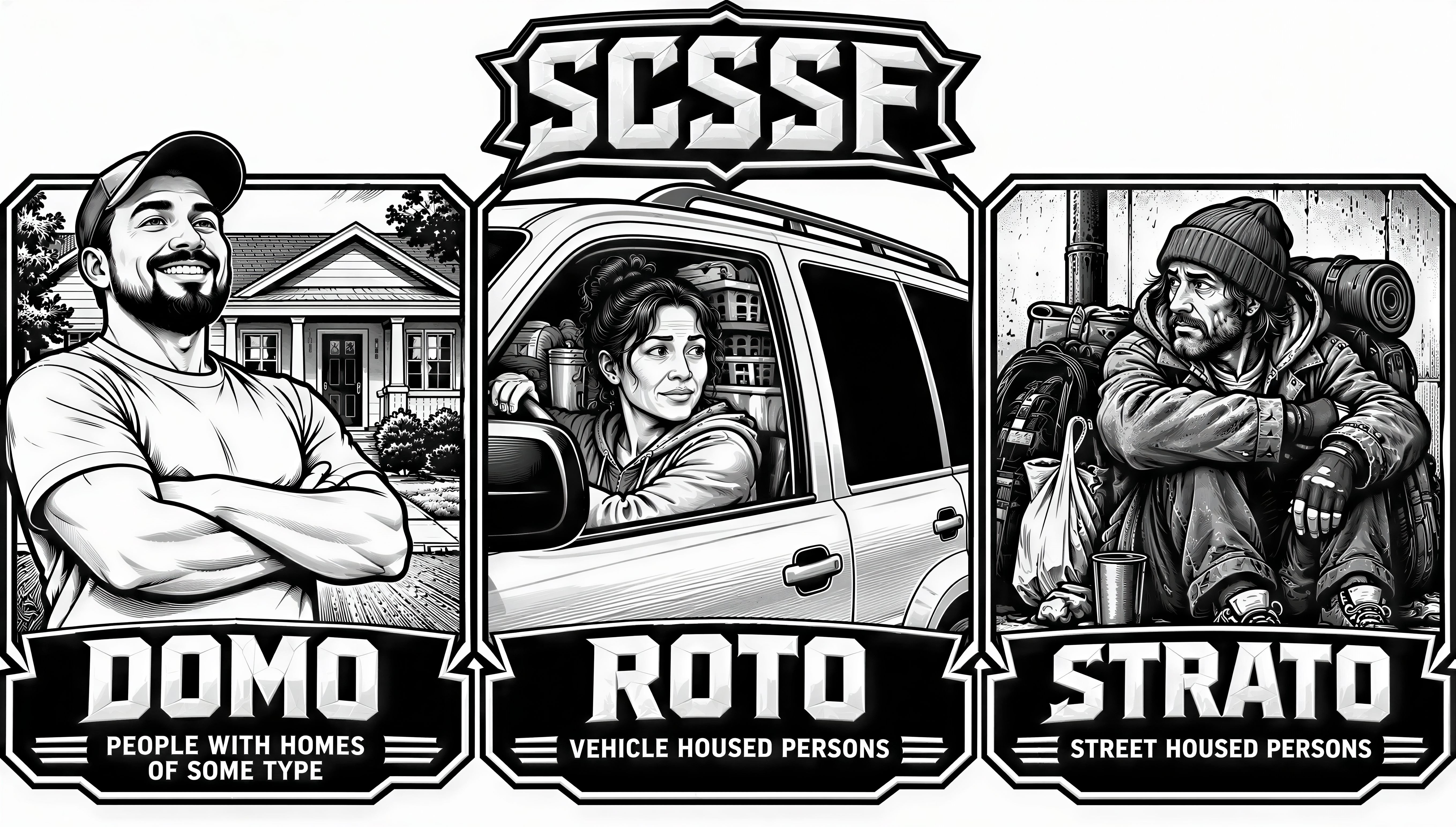 ROTO
Domo
Roto
Strato
Focus. Amplify. Transform,
The 10 'R' Characteristics of a Master Shadow Sleeper
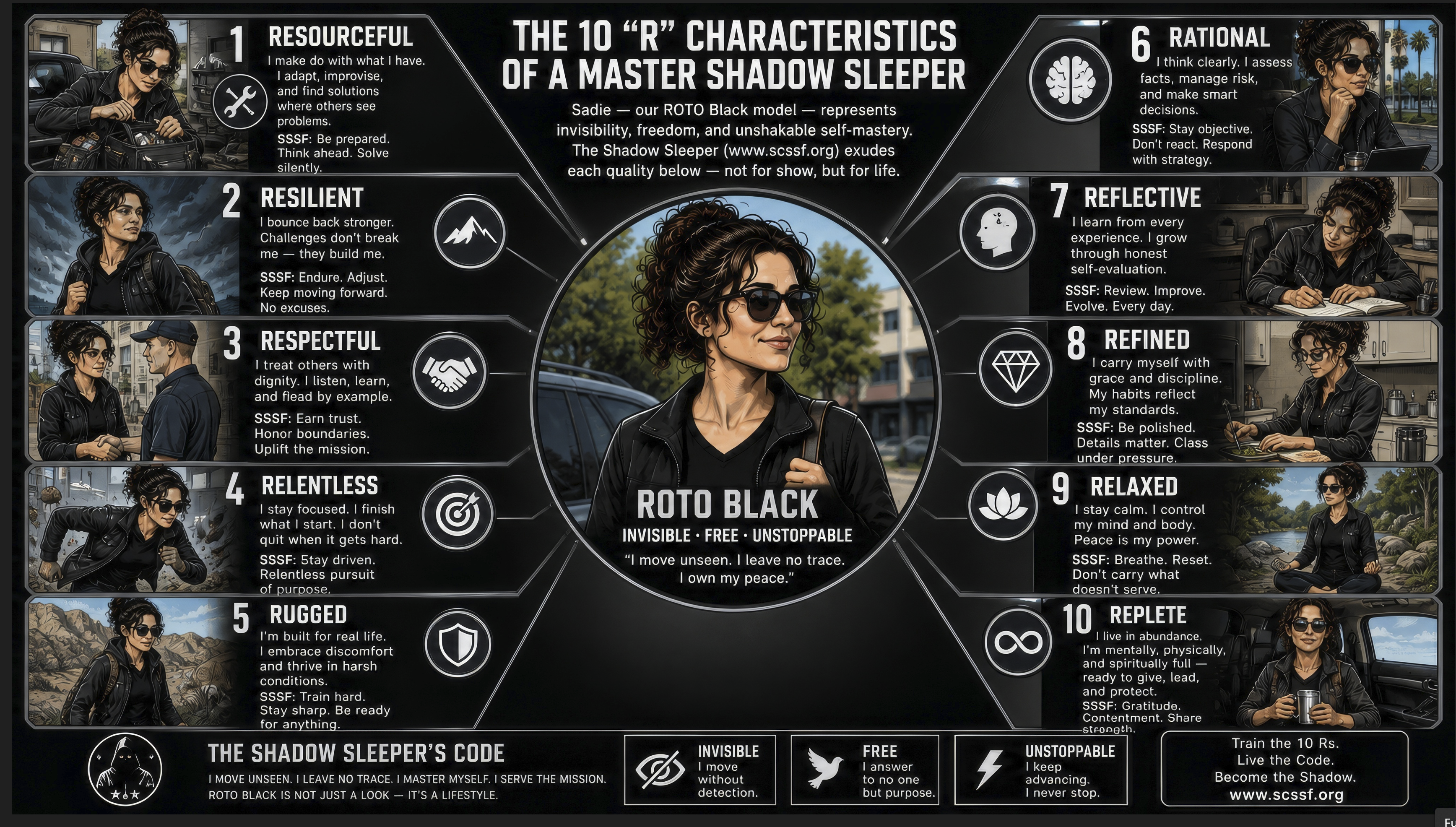
Resourceful
Resilient
Respectful
Relentless
Rugged
Rational
Reflective
Refined
Relaxed
Replete
Foundation Creed
Founder Insight
Framework
We are supplying the SCSSF Framework as an ever evolving and continuously improving "Manual And Survival Guide". Many red (new) shadow sleepers often spend weeks or months learning things we play to teach them Day 1 via this framework. We will cover definitions, optimum configurations, problem resolution, expected opposition... even meditation and breathing technques... all degined to empower a red shadow sleeper and send them to orange shadow sleeper almost immediately. We will also regular interview veteran shadow sleepers (VSS) to distill out key survival tips and tactics from those that have been most successful. We hope to shave weeks to months off of the maturity journey to black shadow sleepers and make it as painless a process as possible. If you are a veteran and would like to provide tips and tactics in the VSS section please email up at help@scssf.org as we would love to have it. If a red shadow sleeper can benefit in even the slightest way, we will be honored to host the information.
The Optimum Shadow Sleeper Configuration
A red shadow sleeper has a lot to learn especially without knowledge of sites like this. We note 10 categories with which to measure and track the maturity and capability of a shadow sleeper. Each of these categories do not exist in a vacuum, but rather work together to multiply efforts and the quality of the outcomes they lead to.
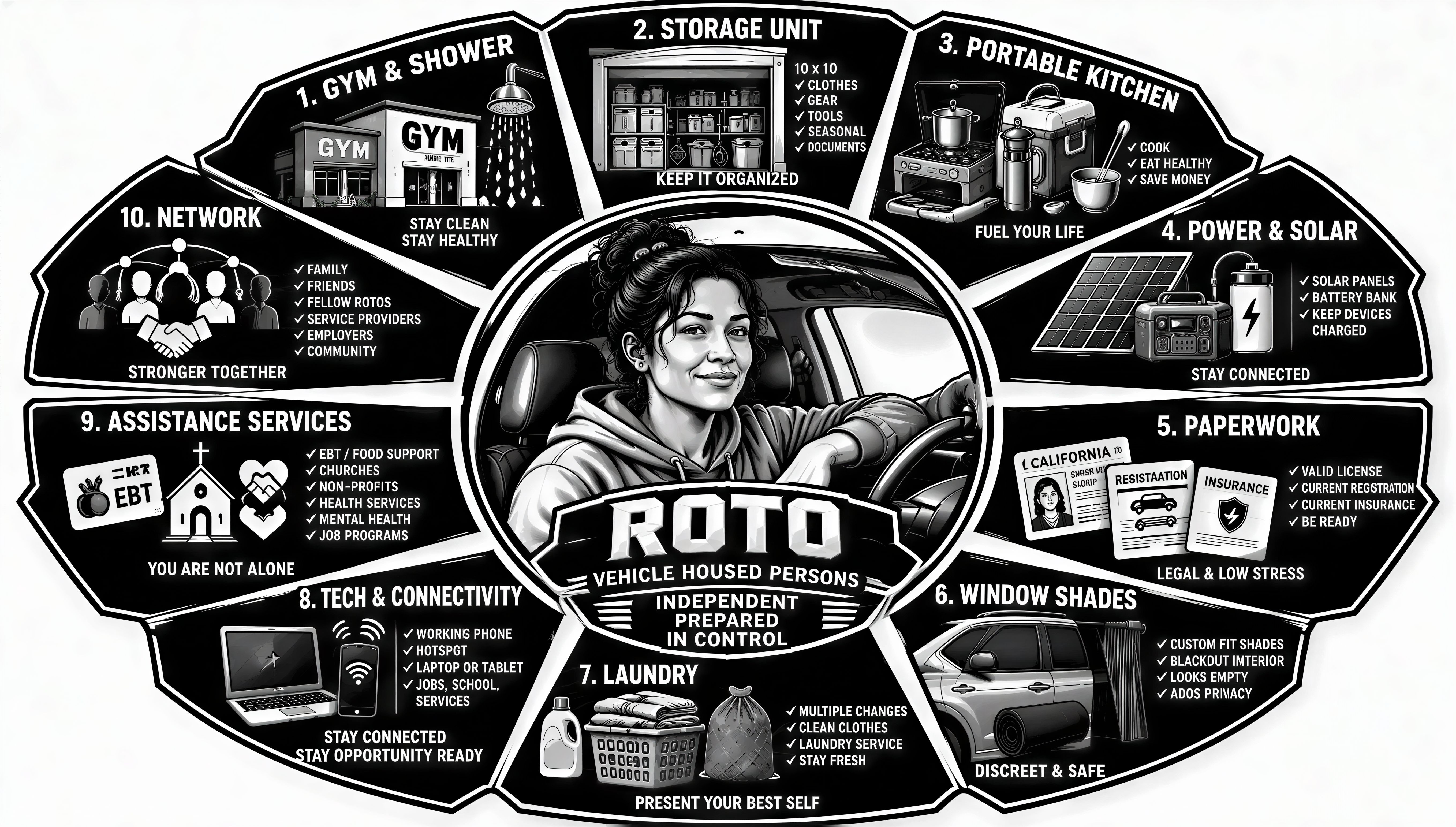
1. Hygiene And Bathing
Boost Event Goals: Give away short term and medium term gym memberships based on donation base and current event donors. 2. Storage Unit (10' x 10')
Boost Event Goals: Give away short term and medium term gym memberships based on donation base and current event donors.3. Portable Kitchen Equipment
Boost Event Goals: Give away short term and medium term gym memberships based on donation base and current event donors.4. Power (Battery & Solar)
Boost Event Goals: Give away short term and medium term gym memberships based on donation base and current event donors.5. Paperwork (Up to Date)
Boost Event Goals: Give away short term and medium term gym memberships based on donation base and current event donors.6. Window Shades & Interior Masking
Boost Event Goals: Give away short term and medium term gym memberships based on donation base and current event donors.7. Laundry & Clothing
Boost Event Goals: Give away short term and medium term gym memberships based on donation base and current event donors.8. Connectivity
Boost Event Goals: Give away short term and medium term gym memberships based on donation base and current event donors.9. Assistance Services
Boost Event Goals: Give away short term and medium term gym memberships based on donation base and current event donors.10. Network
Boost Event Goals: Give away short term and medium term gym memberships based on donation base and current event donors.The Shadow Sleeper Maturity Journey From Beginer To Expert Broken Into 4 Main Categories
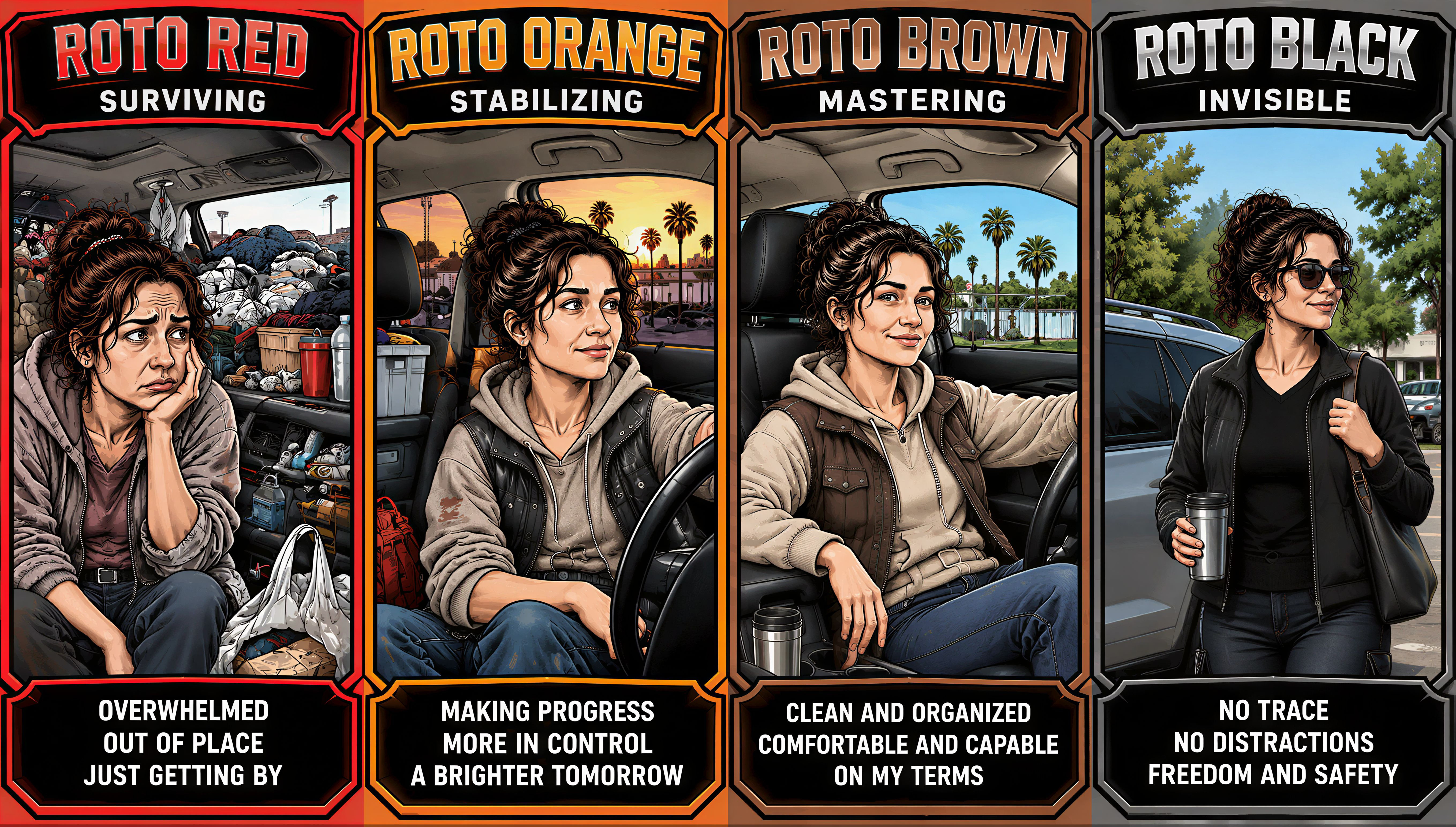
Roto Red: Surviving
Roto Orange: Stabilizing
Roto Brown: Mastering
Roto Black: Invisible
Birds Of Prey

Eagles
Law Enforcement
Law enforcement officers—the Eagles—are the professional backbone of public safety and the primary protectors of order in any community. We hold a deeply sympathetic and empathetic view of them. They carry enormous responsibility, work under constant scrutiny, and routinely put themselves in harm’s way to keep the rest of us safe. For shadow sleepers, the default posture should almost always be compliance, calm communication, and understanding. Only in the rarest of circumstances—where an officer is clearly acting outside the law in a way that creates immediate, verifiable danger—would any other response even be considered. Their powers on this topic are broad: they have the authority to approach, question, detain, and, when necessary, arrest individuals on public property or in public view; they can issue citations for camping, loitering, or trespass ordinances; and they possess qualified immunity and the legal tools to enforce local, state, and federal laws that directly affect where and how people rest or occupy space .The best way to navigate an encounter is simple and consistent: stay calm, keep your hands visible, answer questions honestly without volunteering unnecessary information, and follow lawful instructions. Identify yourself if asked, explain your situation briefly and respectfully, and, if you believe a citation or order is incorrect, resolve it later through proper channels rather than on the street. Treating officers as the home team—professionals doing a difficult job—builds goodwill and dramatically reduces the chance of escalation. In the overwhelming majority of cases, a cooperative attitude is the safest and most effective path.
Hawks
Private Security Officers
Private security officers—the Hawks—deserve genuine respect, though not quite the same institutional deference we give sworn law enforcement. On their clients’ property they function as the “police of that property.” They are specifically hired by a property owner to enforce their rules and directives (within the letter of the law). They represent and are an extension of the propety owner When you are on private land, parking lots, business premises, or other controlled spaces, treat them exactly as you would treat police: comply, remain calm, and avoid confrontation. They are hired to protect specific places and people, and their presence is a legitimate extension of the property owner’s rights. We teach our community to approach them with the same understanding we extend to officers—most are simply doing a job and prefer peaceful resolutions.Their powers, however, have clear limits. Private security generally cannot detain you beyond a citizen’s arrest (which is narrowly defined and risky for them), cannot search you without consent or probable cause in limited circumstances, and cannot enforce criminal law the way police can. Their primary tools are verbal commands, requests to leave the property, and the ability to call actual law enforcement if you refuse. Once you are off the private property, their authority largely ends. Compliance while on site, followed by a quiet exit when asked, remains the wisest course. Respect their role, understand the boundaries of private property, and you will almost always leave the interaction without further complication.
Chicken Hawks
Vigilante Citizens
Vigilante citizens—the Chicken Hawks—are a different category entirely. They possess no special legal powers, no badge, and no authority beyond that of any other private individual. They cannot detain you, search you, issue lawful orders, or enforce ordinances. Any attempt to do so quickly risks crossing into false imprisonment, assault, harassment, or disorderly conduct. We teach shadow sleepers to know the law, stand up for themselves, and refuse to be intimidated by self-appointed enforcers who often act out of frustration, ideology, or a desire for content rather than genuine public safety.Law enforcement and private security are the home team; Chicken Hawks are natural opposition. When confronted by a vigilante, remain polite but firm, state clearly that they have no authority, and, if necessary, record the interaction while continuing to move or occupy lawful space. Do not escalate, but do not back down from asserting your rights. Know local camping, loitering, and public-space rules so you can correctly identify when a demand is empty. If a situation turns threatening, the correct response is to disengage and, when appropriate, contact real law enforcement—the Eagles—who have the actual power and duty to intervene. Standing your ground lawfully against those who lack authority protects both your dignity and your safety.
The Law
Understanding the Legal Landscape for Roto / Shadow Sleepers in California
The Southern California Shadow Sleepers Foundation exists to support vehicle-housed individuals—our resilient Roto community—who are navigating life with resourcefulness and determination. Your vehicle is your home and your mobility tool, and California law largely recognizes that simply resting or sleeping inside a legally parked vehicle is not a statewide crime. There is no California Penal Code or Vehicle Code section that broadly prohibits sleeping in one’s own car or van on public streets. Instead, the rules are set by local municipal ordinances that vary by city and neighborhood. This patchwork means that with awareness and planning, many Roto can rest safely while staying compliant and focused on rebuilding stability, mobility, and opportunity.
Common local rules that may come up include ordinances such as Los Angeles Municipal Code (LAMC) § 85.02, which restricts vehicle habitation in certain residential areas or near schools and parks during overnight hours, and similar San Diego Municipal Code provisions (e.g., § 86.0137) that address human habitation in vehicles on public streets between 9 p.m. and 6 a.m. or within 500 feet of residences or schools. Other cities have comparable time-and-place restrictions or 72-hour parking rules under California Vehicle Code (CVC) authority. Citations under these local codes are typically infractions or, less often, misdemeanors, with potential outcomes limited to modest fines, warnings, or—in more serious or repeated cases—towing. These are administrative or low-level matters that can often be addressed constructively, especially when the individual is simply resting rather than creating a public safety issue. The focus remains on practical solutions and community support rather than punishment.
Potential repercussions are generally manageable and rarely escalate when Roto act responsibly. A first-time citation might result in a fine in the $75–$250 range in many jurisdictions, with opportunities to contest or seek reduced penalties. Towing can occur under CVC § 22651 in specific situations (such as exceeding rest-area limits or local 72-hour rules), but recovery is possible and support networks exist to help. Importantly, Roto are not attempting to break the law; circumstances have required vehicle-based living as a temporary, legitimate housing strategy. Courts and agencies increasingly recognize the distinction between opportunistic camping and survival-oriented vehicle dwelling. Resources like safe-parking programs and foundation partnerships further reduce friction and open pathways to greater stability.
Before any enforcement contact, it is wise to consult attorneys who specialize in municipal code defense, traffic and parking matters, or homelessness and civil-rights issues. Legal-aid organizations, public-interest firms focused on housing rights, and attorneys experienced with vehicle-habitation ordinances can provide proactive advice on local rules, safe parking locations, and documentation strategies. After a citation or tow, the same specialists—or criminal-defense attorneys familiar with infractions and misdemeanors—can represent you in contesting tickets, negotiating reductions, or recovering a vehicle. Organizations connected to the Shadow Sleepers Foundation or California legal-aid networks can help make these introductions, ensuring Roto receive practical, supportive guidance rather than facing the system alone.
California strongly encourages drivers to rest when tired. State regulations for commercial drivers (California Code of Regulations Title 13 § 1214 and related Vehicle Code provisions) explicitly prohibit operating a vehicle while impaired by fatigue, and general negligence principles under case law hold that continuing to drive while knowingly drowsy can constitute recklessness. Caltrans safety roadside rest areas expressly allow parking and sleeping for up to eight hours within any 24-hour period (CVC § 22651(s) and Streets & Highways Code provisions governing rest areas). Pulling over to rest is not only legal—it is the responsible, safety-first choice that protects both the driver and the public. Roto can confidently cite these principles when explaining a need to stop and sleep.
Private citizens do not have authority to impede, harass, or “evict” someone resting lawfully in a vehicle. Conduct that crosses into repeated following, threats, or intimidation may violate Penal Code § 646.9 (stalking) or related harassment statutes. Tampering with a vehicle or its contents without consent is prohibited under Vehicle Code §§ 10852–10853. Disturbing the peace or unauthorized interference can also implicate other Penal Code provisions. Roto who encounter aggressive vigilante behavior should document the incident safely and contact law enforcement or a civil-rights attorney; the law protects the right to rest without private interference. These protections reinforce that vehicle-housed living, when conducted respectfully, is a personal matter between the individual and public authorities—not a license for self-appointed enforcement.
Relevant case law and broader principles further support a constructive approach. The U.S. Supreme Court’s decision in City of Grants Pass v. Johnson (2024) clarified local authority over outdoor camping, yet California cities continue to refine ordinances with attention to available alternatives and due process. Many jurisdictions pair enforcement with outreach and safe-parking options, aligning with the Foundation’s goals of dignity and practical support. No Roto needs to navigate this alone. Connecting early with knowledgeable counsel—whether for preventive advice or post-citation representation—transforms potential stress into informed action and keeps the focus on moving forward.
The Shadow Sleepers community is resilient, resourceful, and deserving of pathways that strengthen stability, mobility, and opportunity. By understanding the local rules, resting responsibly when needed, and linking with the right legal advocates, Roto can protect their progress and continue building better futures. Reach out to legal-aid societies, housing-rights clinics, or Foundation partners for tailored referrals; support is available, and the legal framework contains room for both compliance and compassion.
Disclaimer: This overview is for informational and supportive purposes only and does not constitute legal advice. Laws and local ordinances change; always verify current rules for your specific location and consult a qualified California attorney for advice regarding your individual situation.
Information xChange (IX)
The Foundation will operate as a highly AI-augmented organization centered on a proprietary, high-dimensional data model that integrates real-world observations, anonymized participant feedback, resource utilization metrics, geographic mobility patterns, service outcomes, and external socioeconomic indicators. Most Shadow Sleepers are wary of their information being on any lists. The founder is going to implement Identity Abstraction Data Models (IADM). IADM will have all the power of a standard AI data model, but tied to an internal system handle rather than their actual identity. This will allow us to harness all the power of an AI model while not identifying a single real person, keeping their identity and data patterns safe.
How this model and AI capability create concrete value:
- Precision Resource Matching — AI identifies which combinations of support (storage + power + laundry access, for example) produce the highest stability gains for different subgroups within the Shadow Sleeper population, allowing partners to allocate limited resources far more effectively.
- Predictive Needs Forecasting — By analyzing seasonal, economic, and location-based patterns, the system anticipates surges in demand (cold-weather gear, battery capacity, paperwork renewals) so events and partnerships can be planned proactively rather than reactively.
- Outcome Measurement & Accountability — Continuous tracking of key indicators (days of uninterrupted vehicle stability, successful benefit compliance, employment transitions, network connections formed) provides transparent, evidence-based reporting to funders, state agencies, and nonprofit partners.
- Personalized Guidance at Scale — AI-assisted tools can generate individualized “optimum configuration” recommendations (drawing on the original ROTO framework) for new or transitioning Shadow Sleepers without requiring one-on-one staff time for every case.
- Network Effect Amplification — The model surfaces high-value connection opportunities—pairing Shadow Sleepers with complementary skills, matching them to local service providers, or identifying natural peer mentors—turning isolated individuals into a stronger mutual-aid network.
- Policy & Advocacy Intelligence — Aggregated, privacy-protected insights reveal systemic friction points (registration barriers, parking enforcement patterns, gaps in existing social services) that can be presented to legislators and agencies with quantitative weight.
- Operational Efficiency — Internal AI systems streamline event logistics, volunteer coordination, donation inventory, compliance tracking for the 501(c)(3) service-hour program, and grant reporting—allowing a lean organization to punch far above its weight.
- Longitudinal Learning — As the dataset grows over years, the Foundation becomes the definitive knowledge repository on vehicle-housed living in the United States, enabling continuous refinement of best practices and serving as a trusted research partner for academic, governmental, and philanthropic stakeholders.
The So Cal Shadow Sleeper's Survuval Guide

SSSCF Mobile Cavalry forms the veteran core of the Southern California Shadow Sleepers Foundation. Any Shadow Sleeper who has earned veteran status—through sustained mastery of vehicle-based living, deep practical knowledge, and proven reliability—automatically belongs to this body. Represented by the distinctive emblem of a mechanical winged horse fused with motorcycle power, the Mobile Cavalry embodies mobility, readiness, and the hard-won expertise that only experience on the road can produce.
This group is vital because it supplies the living leadership and institutional memory the Foundation needs to protect and elevate the entire Roto community. Veterans of the Mobile Cavalry mentor newcomers, model the ten “R” characteristics and Foundation Creed, and move quickly to deliver peer support, resource connections, and calm guidance when crises arise. Their presence turns isolated individual survival into a networked, resilient force—preventing many from slipping into street homelessness while steadily raising standards of cleanliness, legality, and mutual aid across the Shadow Sleeper population.

SCSSF Blog
The Ghost Girl, The Zombie & The Beauty Queen
ss1 Blog Entry: Septmember 25th, 2026
.png)
.png)
.png)
.png)
.png)
.png)
.png)
.png)
.png)
.png)
.png)
.png)
.png)
The Double Kit Calamity Of The Great Procyon Incursion Of Hell Week.
ss1 Blog Entry: October 10th, 2026
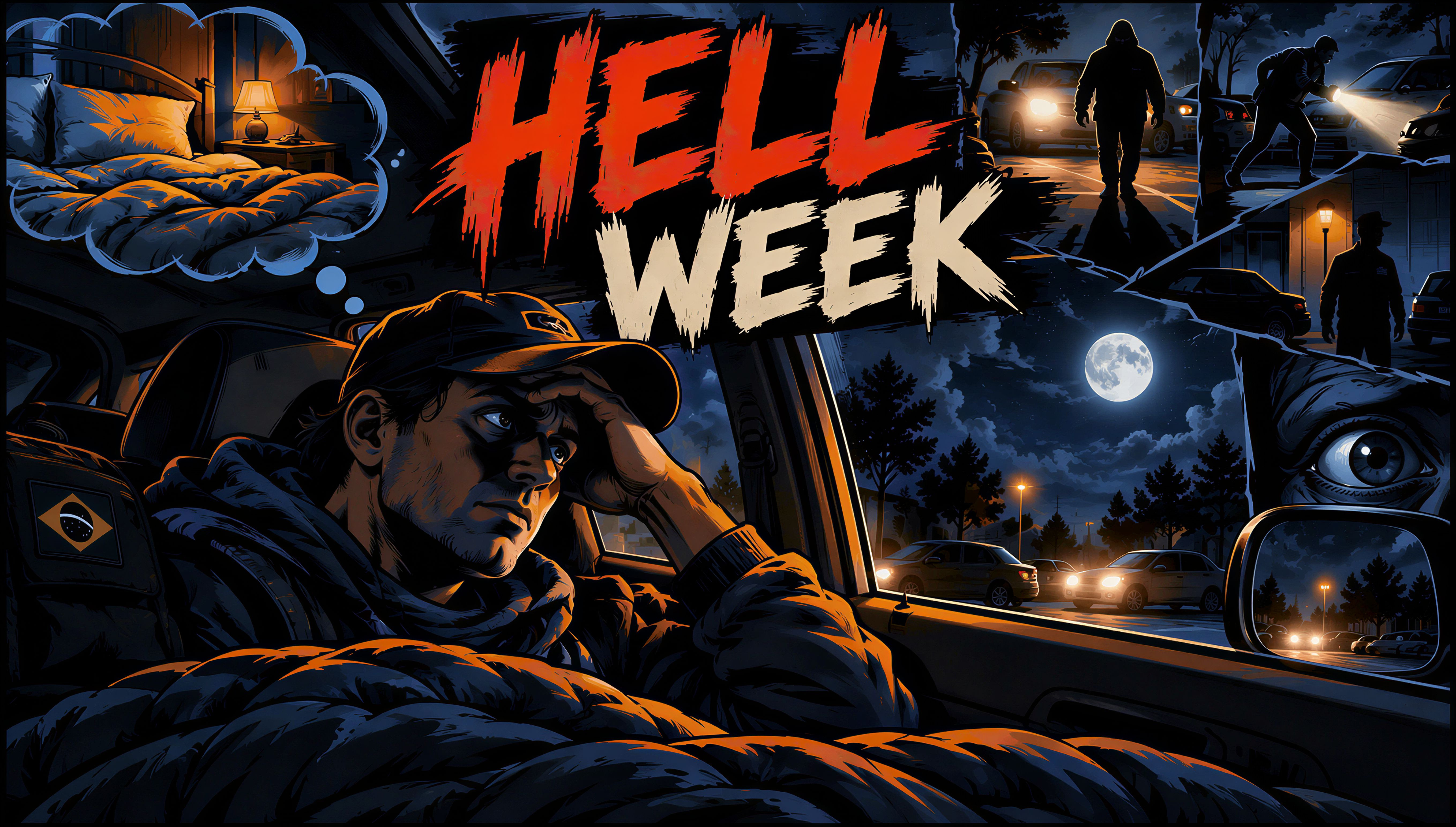
Hell week. I sure didn't envision it as hell in the weeks before I was displaced into living in my car. In hindsight, I don't know how I didn't see it coming. I made every mistake one could, and by the fifth night, I had only slept in tiny, 45-minute maximum sessions in completely different locations. When you are pushing your sleep deprivation and schedule disassociation this far, it becomes difficult to tell what is real and what is not. Is this real? Am I dreaming, and will I wake up in a warm bed laughing at the absurdity of this obvious dream? Even going in and out of dream-like blocks of time, you quickly ground back into the reality that you are homeless. There is no place to go, and almost every place you can sleep engenders very high risks of all types.
Once you get further into the journey, you can easily spot other Shadow Sleepers having their own hell week. You can tell they are getting the business end of something they did not expect would be this hard. Was I that obvious to others in my hell week? Probably. It is a violent decoupling from everything you once took for granted—walls, locks, a predictable thermostat, the fundamental assumption of safety. Your first seven days in a vehicle are an unremitting, visceral haze of hyper-vigilance. Every primitive survival mechanism buried in your DNA wakes up all at once, screaming. Every passing headlight is a potential threat of an unknown type; every stray footstep on the asphalt could be a threat walking directly toward your vehicle. You don’t sleep; you simply drift through shallow valleys of exhaustion, your body rigid, acting purely on muscle memory and raw adrenaline. It is a psychological crucible where the mind tries to run its daily maintenance programs while the body remains under an existential siege.
Yet, if Hell Week forces you to pay a devastating toll in blood and peace of mind, it occasionally offers a transactional upside that feels almost spiritual. The first three nights, I had slavishly followed a now-obvious false doctrine: the residential, single-family home areas were the correct place to disappear into the shadows. After the third night, it finally set in. It is essentially impossible to "disappear" there in a world of Ring cameras, night vision, motion alerts, and Self-Appointed Street Guardians watching every square inch of a road they feel fiercely territorial over. On the fourth night, I moved to a street I remembered from 25 years ago, where many different apartment complexes shared the curb. No one knew which car was tied to what apartment; you could truly blend in.
As a result, I got a solid, two-hour block of sleep all at once. 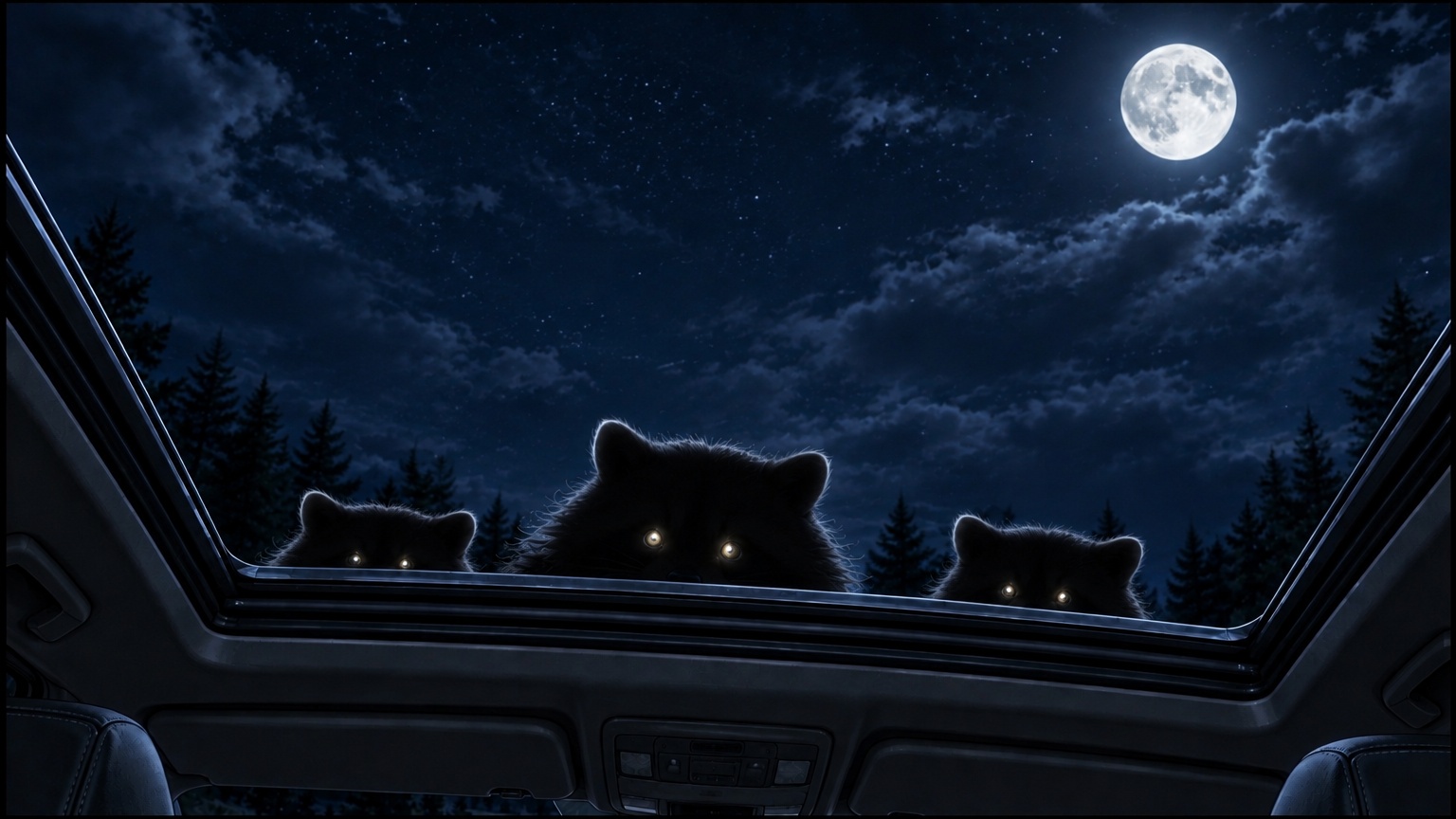 So deep was that two-hour sleep that I felt all but drunk when I did wake up. I had fallen asleep with a very large sunroof rolled all the way open, staring up at a deep, purple-streaked, black velvet sky. A chartreuse moon dominated an entire race of stars, which seemed to form the very structure of this nighttime scene. Whereas society thinks that being a vehicle-housed person means everything must be entirely negative, this particular moment was something almost addicting. Camping is a temporary break from a normal lifestyle and psychological mindset, a controlled environment where you know you will soon be returning to comfort. This was quite different. Technically, this was my home now—nature—and it was beautiful. Falling asleep in this night scene was nothing less than spiritual.
The world outside goes silent, you pull back the headliner of the sunroof, and there it is. A pristine, unblemished celestial canopy that no millionaire in a Domo mansion can truly own. The Southern California moon hangs massive and heavy in the ink-black sky, a luminous pearl bathing the interior of your SUV in a ghostly, silver luminescence. Staring up into that infinite velvet dome, surrounded by a swirling galaxy of cold, brilliant stars, an overwhelming tranquility begins to overtake the chaos. The physical constraints of the metal shell around you entirely evaporate. You aren’t just a person hiding in the shadows anymore; you are part of the vast, quiet architecture of the universe.
That profound peacefulness begins to operate like a narcotic on your overloaded nervous system. As my eyes tracked the slow, majestic drift of the clouds crossing the lunar face, my consciousness began to splinter, slipping away from the waking world and dissolving into the sky. It fueled a dream state that was deeply immersive—a god-like, ethereal realm based entirely within the stars. I wasn’t just observing heaven; I was anchored to it. Every sense was heightened, bleeding into a rare sixth sense where time, space, and identity became completely frictionless. I could feel the cold, majestic resonance of the cosmos pressing against my soul. There was no hunger, no financial plight, no societal invisibility. Just pure, unadulterated ascension.
But the subconscious mind of a Shadow Sleeper never truly abdicates its post. Even in the deepest, most beautiful sectors of an astral dream, evolutionary pressures have hard-pressed an eternally vigilant telemetry and tracking system into our biology. We are not always fully aware of it, but we are certainly the perpetual recipients of its warnings and prognostications. I will often be woken up by this internal, AWACS-style system, and seldom is it for no reason. For the first few seconds, I won't even know why I am awake. Then, reality registers. In past nights, I might see an Eagle with a Red Shadow Sleeper caught in its net, or Chicken Hawks checking cars one by one, working systematically toward my position. The system always alerts me early, well before I am consciously aware of the actual nature of the danger.
A dormant alarm wire remains tightly stretched across your perception field. Suddenly, the dream began to curdle.  A thick, heavy wave of visceral apprehension shot through the celestial haze, violently pulling my consciousness back toward the surface. It wasn't a sound—not yet—but a sudden, chilling shift in the atmosphere. My eyes snapped open, my lungs arresting mid-breath as the haze of the god-like star realm shattered instantly against the hard reality of the SUV's cabin. I was awake, but the heavy hand of dread was pressing firmly down on my chest, warning me that the pristine isolation of my sanctuary had just been profoundly violated.
In that frozen tick of time, the dream evaporated, leaving nothing but raw, primitive survival instinct. My gaze moved upward, and the breath died in my throat. There was no protective layer of glass separating me from the wild. The sunroof was slid completely back, an enormous, gaping thirty-six by twenty-six inch void that laid the entire cabin bare to the night. Framed by the massive, silver glare of the moon, perched right on the edge of that open precipice, were three distinct silhouettes.
To a housed Domo, they are just backyard scavengers.
 To a Shadow Sleeper whose car is packed to the ceiling with empty food containers, their presence was a silent, tactical invasion. With a wide-open sunroof on a cold, high-humidity night, the heavy scent of leftover fast food didn't just drift—it likely radiated outward like a homing beacon, detectable for a mile or two down the tree line. To an apex matriarch, my vehicle was a towering monolith of opportunity. For hours, she had likely guided her clumsy, heavy kits across the asphalt, her acute senses locked onto the overwhelming aroma of the meat and grease trapped inside the metal shell. She hadn’t come for a casual forage; she had brought her legacy on a high-stakes hunt, moving with quiet, military precision, entirely prepared to fight to protect her bloodline.
When my eyes snapped open and our gazes locked, the illusion of the peaceful night shattered into sheer, unadulterated terror. I was scared shitless. Raccoons are notorious for inflicting horrific, deep-shredding wounds, and any seasoned outdoorsman knows that with babies present, you are far better off facing a territorial male than a protective mother. The danger was immediate, visceral, and inches from my face.
Time didn't just slow down; it ground to a violent, agonizing halt. No one breathed. No one blinked. In the silver moonlight, the mama raccoon instantly reared back onto her hind legs like a miniature grizzly bear right on the lip of the open roof, baring a mouthful of needle-sharp teeth in a silent, terrifying display of aggression. She was trying to completely dominate my perception field, her chest expanded, her eyes blazing with an unholy lunar fire as she prepared to defend her young. And then, the bizarre irony settled in. Flanking her on either side of the open chasm, the two kits mirrored her flawlessly. They rose up on their tiny hind legs, puffing out their chest fur, trying with every ounce of their juvenile strength to look like ferocious, bloodthirsty killers.
It was a standoff straight out of a nightmare, a fragile truce balanced on the razor-edge of an open drop into my lap.
To fully grasp the gravity of that frozen standoff, you have to understand the biological machinery at work on the other side of that open sunroof. Raccoons, scientifically classified as Procyon lotor, possess a hyper-specialized sensory array that makes them formidable urban apex predators. Their brains are wired for tactile and olfactory dominance; a massive portion of their somatosensory cortex is dedicated entirely to their front paws, which are flooded with specialized mechanoreceptors. On a high-humidity SoCal night, the dense, moisture-laden air acts as a heavy physical medium, binding to volatile organic compounds and magnifying the scent of discarded fats and proteins. To this matriarch, the 36-by-26-inch chasm of my open sunroof wasn't just a window—it was a literal atmospheric exhaust plume venting a concentrated stream of high-calorie data straight into her olfactory bulb from a mile down the block.
She had processed that data through the lens of evolutionary urgency. In the wild, a mother raccoon is the commander of a highly structured mobile training unit, tasked with transitioning her kits from milk-dependent offspring to independent tactical foragers before winter sets in. She uses low-frequency vocalizations—subtle chitters and clicks—and assertive herding body language to guide her clumsy, heavy-furred kits across treacherous terrain with ninja-like silence. This incursion onto my roof was meant to be a masterclass in silent tactical acquisition. She had herded them up the slick rubber of my tires, across the hood, and onto the metal high ground, all while maintaining perfect operational security. She was teaching her legacy how to navigate human infrastructure, how to read the winds, and how to project absolute, terrifying dominance should they trap a potential rival in an enclosed space. She had done everything right—until her clumsy trainees ran headfirst into the unforgiving laws of physics.
The high humidity had coated the slick metal and plastic of the vehicle's roof in an invisible sheen of moisture, making it all but impossible to hold a steady footing. The kit on the left, entirely consumed by its attempt to look fierce, lost its grip on the slick edge. Its tiny claws scrambled frantically against the metal for a fraction of a second before it slipped, sliding down the pitched angle of the windshield almost cartoonishly, completely vanishing from sight.
In t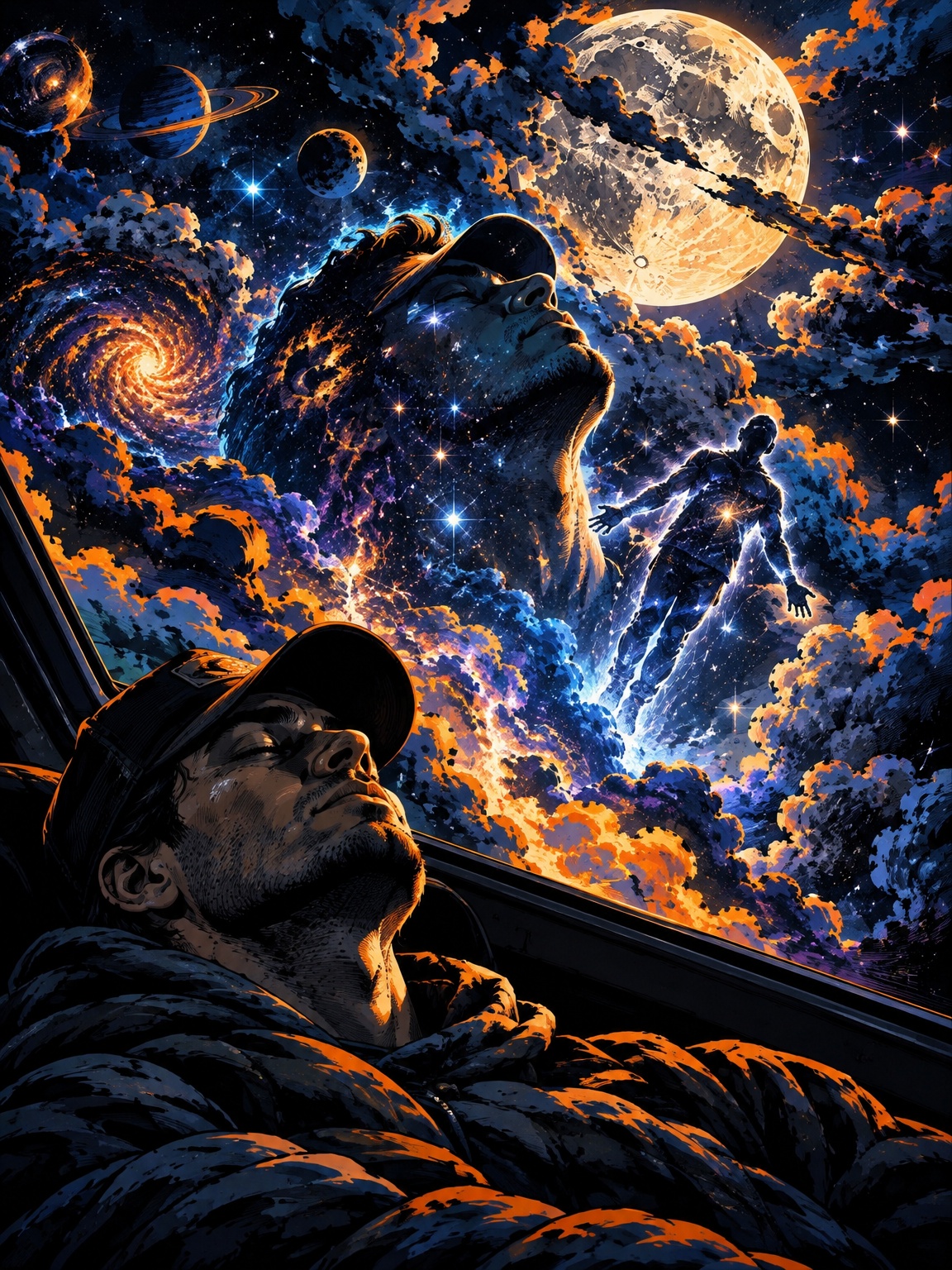 he matriarch’s mind, there was no concept of gravity or traction. There was only cause and effect. I had done that.
She snapped her head around, her black mask—already shaped by the natural arcs, lines, and contours of anger—now contorting into a mask of pure, vengeful fury. The glare she leveled at me through the open space was so hot, so deeply personal, I was entirely convinced she was about to violently lunge through the opening and tear into my face. I felt the attack coming like electricity crackling across my nervous system, setting off every internal alarm and warning system available. I wasn't going to just wait. A tactical, preemptive verbal retort tore out of me almost involuntarily—an attempted sound blow and audial deterrence, even if ultimately futile.
"Don't look at me! I didn't do that!"
>As if on cue, the universe delivered the punchline. The second kit, momentarily distracted by its sibling's sudden disappearance, suffered the exact same fate on the damp, slick surface. It made a near-identical shriek as its feet gave way, its fierce expression turning to utter bewilderment as it, too, slid helplessly down the windshield and out of view. When I looked back to Mama to see her response this time and prepare for the absolute worst, she was already gone. With the fall of the second kit, she lost interest in me and the food entirely. She was already rushing down to assess the situation and tactically reacquire her offspring assets. The tension in the air simply ceased to exist in a microsecond, and the spirituality of the skyscape immediately filled the void back in.
I sat there in the silence of my SUV, my heart hammering against my ribs like a trapped bird, staring up at the empty, moonlit sky.
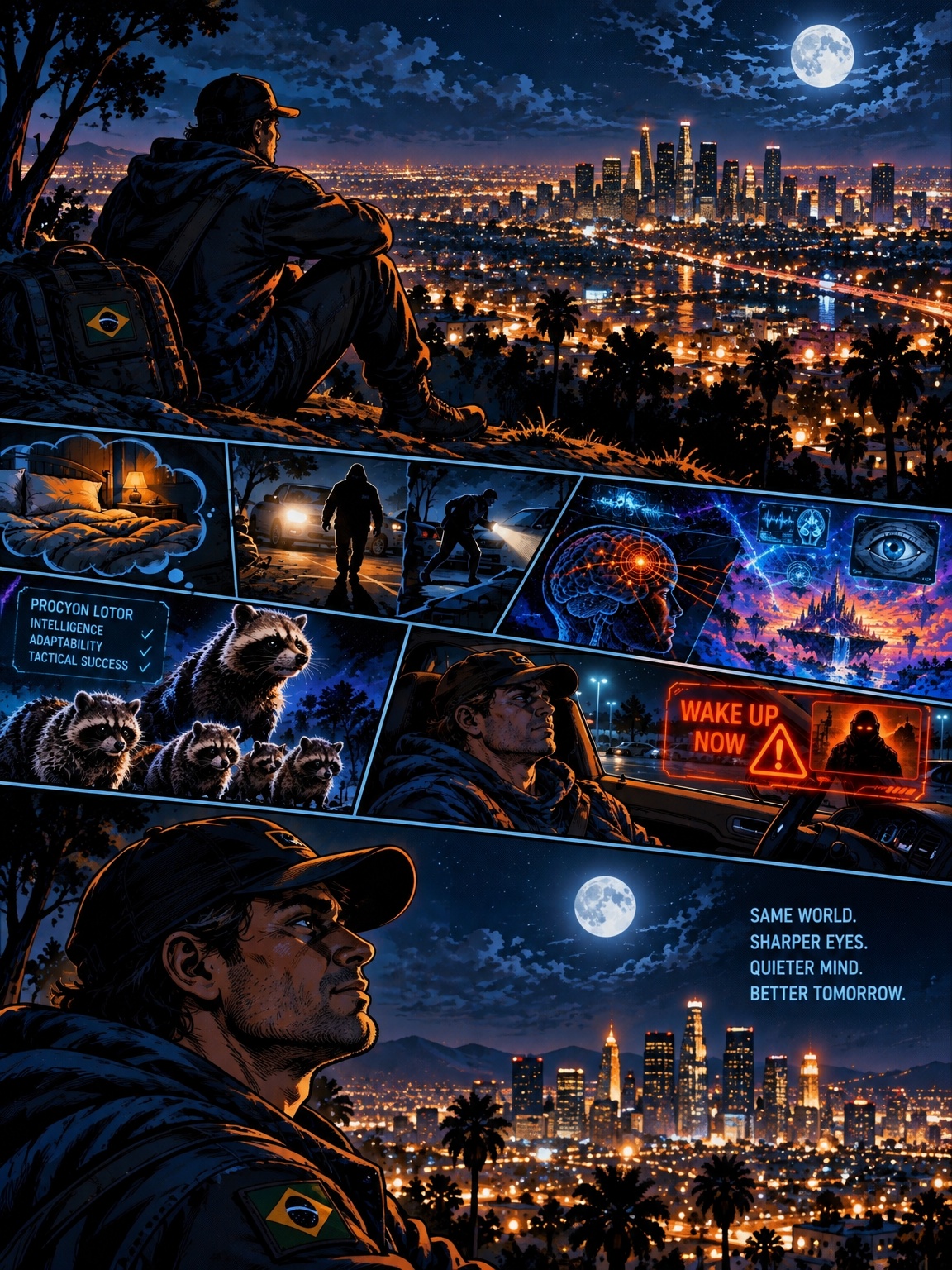 "No way that just happened," I said to myself out loud. I had set myself up against a human incursion, never even considering the possibility of a Procyon assault from the sunroof high ground. I was trembling from the shock of the sheer, abrupt jerk of my mind back from the peaceful dream realm into a very harsh and currently dangerous reality. The terrifying intensity of the confrontation seared this event into my brain for life. Yet, as the muscle memory faded and the cold air settled into the open cabin, I suddenly started to laugh until my eyes welled with tears. I kept picturing the cartoonish fall of the kits, the cute little shrieks they made as they realized they were falling out of the scene Mama had so meticulously set up for them. What I stretched into several paragraphs in this post transpired in a mere few high-emotional-intensity seconds.
It was a very proper addition to hell week: the harsh and highly proven realization that I faced wildlife threats right alongside human threats. Most humans can be reasoned with, even the Chicken Hawks. Not so for a wild animal with offspring present. In their world, reason will always fall to the wayside in favor of lightning-fast, violent solutions to imminent threats.
E N D O F B L O G S E C T I O N
Contact
Located: In the shadows, everywhere and nowhere in Southern Califorinia
Email: help@scssf.org
Text Only: (310) 916-9178
This number only accepts texts and will not accept any phone calls.Please Note: This email address and text service are not moniutored 24/7 and we may take more than one business day to respond. If you are having a life threatehing emergency please call 911. If you need immediate assiatnce due to complicatons of homelessness please call 211.